Robotics Seminar @ Illinois
UPCOMING & RECENT EVENTS
Sight for Scale, Sound for Touch: Fusing Internet Video with Acoustic Feedback for Dexterous Robotics
Friday, October 23, 2026
2:00pm Central Time
Zoom Event
Speaker: Jeff Ichnowski (Carnegie Mellon)
Achieving human-like dexterity and broad real-world generalization remains one of modern robotics' grand challenges. While learning directly from internet-scale, “in-the-wild” human videos offers a powerful way to bootstrap multi-finger trajectories, vision alone remains blind to contact microphysics and often struggles with self-occlusion and missing tactile forces. This talk explores an exciting frontier at this intersection, pairing the macro-level behavioral scale of internet video with the micro-physical grounding of sound. We will examine how we can extract complex dexterous priors from web-scale data, and how vibrotactile and acoustic sensing—using both active skin-conduction tracking and passive slip detection—can provide the real-time, high-frequency feedback needed to stabilize these movements. Rather than relying on vision alone, this work points toward a future where robots learn what to do by watching the web, and how to do it by listening to the world.
The Illinois Robotics Group is proud to host the Robotics Seminar @ Illinois series. These seminars provide a diverse lineup of speakers reflecting the interdisciplinary nature of the field of robotics.
We are hosting speakers conducting research in the field of robotics. The talks are given by both professors and students each week, with occasional demonstrations afterwards in the Center for Autonomy Labs housed in the CSL Studio.
Talks are generally held at 2:00pm CT on Friday’s virtually through Zoom, with some in-person talks viewed in the CSL Studio, 1206 W. Clark Street, Urbana. Talks are held in the conference room (1232), which is just west of the Center for Autonomy Lab facilities.
Please Feel Free to Recommend Speakers for Future Talks
If you have suggestions or questions about the Robotics Seminar @ Illinois series, please feel free to contact John M. Hart, Manager & Coordinator of the Center for Autonomy (CfA) Robotics Laboratories and founder of the RS@I .
Fall 2026 Schedule
December 4, 2026
Speaker: Siddartha Srinivasa, University of Washington
November 20, 2026
Speaker: Leonardo Bobadilla, Florida International University
November 13, 2026 - In PERSON
Speaker: Ani Hsieh, University of Pennsylvania
November 6, 2026
Speaker: Yiwei Lyu, Texas A&M University
October 30, 2026
Speaker: Dinesh Manocha, University of Maryland
October 23, 2026
Speaker: Jeff Ichnowski, Carnegie Mellon University
Sight for Scale, Sound for Touch: Fusing Internet Video with Acoustic Feedback for Dexterous Robotics, 2:00pm, October 16, 2026, Zoom event
October 16, 2026
Speaker: Xupeng Zhu & Fan Wang, Amazon Robotics
Industrial research at Amazon Robotics, 2:00pm, October 16, 2026, Zoom event
October 9, 2026
Speaker: Steve Heim, Cornell University
Learning, hierarchies, and reduced order models, 2:00pm, October 9, 2026, Zoom event
September 23, 2026
Speaker: Victor Romero Cano, Cardiff University
What do robots need to know? World representations for autonomous systems, 4:00pm, September 23, 2026, In-person event (1232 CSL Studio)
September 18, 2026
Speaker: Liz Hsiao-Wecksler, University of Illinois at Urbana-Champaign
Pushing the boundaries of assistive and medical devices, 2:00pm, September 18, 2026, In-person event (1232 CSL Studio)
October 23 2026
Sight for scale, sound for touch: Fusing internet video with acoustic feedback for dexterous robotics
Jeff Ichnowski is an assistant professor at Carnegie Mellon University's Robotics Institute and a co-founder of Jacobi Robotics, Inc., a startup that builds software to power the next generation of robotics. His Momentum Robotics Lab explores scalable robot learning algorithms for high-speed, complex motion, task, and manipulation planning, using high-performance computing, optimization, and deep learning.
October 16, 2026
Industrial Research at Amazon Robotics
Xupeng Zhu is an Applied Scientist at Amazon Robotics, where he works on manipulation foundation models for warehouse automation. He received his Ph.D. from the Khoury College of Computer Sciences at Northeastern University, where he was advised by Prof. Robert Platt. His research focuses on robotic visuomotor policy learning, geometric deep learning, and reinforcement learning. His work has been published in leading robotics and machine learning venues, including Science Robotics, RSS, ICML, CoRL, and NeurIPS. He previously interned at Amazon Robotics and the Robotics and AI Institute.
Fan Wang received her B.Sc. (Hons.) in Electrical and Mechanical Engineering from the University of Edinburgh, U.K., followed by an M.Sc. in Electrical and Computer Engineering from the University of Delaware, USA. She earned her Ph.D. in Electrical and Computer Engineering from Duke University. Currently, she is a Senior Research Scientist at Amazon Robotics, where she focuses on robot manipulation for warehouse automation. Her research interests include robotics, planning, manipulation, machine learning, computer vision, and perception-based control of autonomous systems.
October 9, 2026
Learning, Hierarchies, and Reduced Order Models
Steve Heim is faculty at Cornell University's department of Mechanical and Aerospace Engineering, where he uses robotics and machine learning to understand how and why animals move the way they do, and how that insight can help us design better robots and algorithms.
Prior to Cornell, he spent time with the Biomimetic Robotics Lab at MIT, the Intelligent Control Systems group at the Max Planck Institute for Intelligent Systems (MPI-IS), completed his PhD also at MPI-IS with the Dynamic Locomotion Group, and obtained his MSc and BSc from ETH Zurich, with stays at EPFL, TU Delft, and Tohoku University.
September 23, 2026
What do robots need to know?: World representations for autonomous systems
Dr. Victor Romero Cano is a Senior Lecturer in the School of Computational and Mathematical Sciences at Cardiff University, where he is a member of the Human-Centred Computing Research Unit, co-leads the Cardiff University Computational Robotics (CUCR) research team, and manages the Human Centred Computing and Robotics (HCCR) Laboratory. His research focuses on robotics, embodied AI, machine learning, robot perception, and autonomous systems, with applications ranging from autonomous driving to human-centred robotics.
He received his PhD from the University of Sydney, following an MSc from the University of São Paulo and a degree in Mechatronics Engineering from Universidad Autónoma de Occidente, Colombia. His career spans both academia and industry across Australia, France, Colombia, Croatia, and the United Kingdom, including positions at the Rio Tinto Centre for Mine Automation, Inria Grenoble, Universidad Autónoma de Occidente, and Rimac Technology.
Dr. Romero Cano is a Senior Member of IEEE and the IEEE Robotics and Automation Society. He also serves as an Associate Editor for IEEE Robotics and Automation Letters (RA-L).
September 18, 2026
Pushing the boundaries of assistive and medical devices
Elizabeth (Liz) Hsiao-Wecksler, PhD, is the Director of Applied Health Technology and Design in the Grainger College of Engineering and the Grayce Wicall Gauthier Professor in the Department of Mechanical Science and Engineering (MechSE) at the University of Illinois at Urbana-Champaign. She holds courtesy appointments in the Departments of Bioengineering and Industrial & Enterprise Systems Engineering, Neuroscience Program, Center for Autonomy, Carle Illinois College of Medicine, and Division of Disability Resources and Education Services. Her recent work has been supported by the NSF, Jump ARCHES program, and VinUni-Illinois Smart Health Center. Her honors include Past President and Fellow of the American Society of Biomechanics, Fellow of the American Society of Mechanical Engineers, and Distinguished Engineering Educator Award by the Society of Women Engineers.
May 8, 2026
Physical Intelligence for Physical Care: Towards Stakeholder-Informed Caregiving Robots in the Real World
Tapomayukh “Tapo” Bhattacharjee is an Assistant Professor in the Department of Computer Science at Cornell University where he directs the EmPRISE Lab. He completed his Ph.D. in Robotics from Georgia Institute of Technology and was an NIH Ruth L. Kirschstein NRSA postdoctoral research associate in Computer Science & Engineering at the University of Washington. His primary research interests are in the area of physical robot caregiving and physical human-robot interaction. He is the recipient of TRI Young Faculty Researcher Award’24, NSF CAREER Award’23, AFCEA 40 under 40 Award’22, and his work has won Best Systems Paper Award at HRI’26, Best Paper Award at RSS’25, Best Paper and Student Paper Award Finalist and Best HRI Paper Award Finalist at ICRA’25, Best Systems Paper Award Finalist at HRI’24, Best Demo Award at HRI’24, Best RoboCup Paper Award at IROS’22, Best Paper Award Finalist and ABB Best Student Paper Award Finalist at IROS’22, Best Technical Advances Paper Award at HRI’19, and Best Demonstration Award at NeurIPS’18. His work has also been featured in many media outlets including the BBC, Reuters, New York Times, IEEE Spectrum, and GeekWire and his robot-assisted feeding work was selected to be one of the best interactive designs of 2019 by Fast Company.
May 1, 2026
The Mechanical Side of Artificial Intelligence
Robert Wood is the Harry Lewis and Marlyn McGrath Professor of Engineering and Applied Sciences in the Harvard John A. Paulson School of Engineering and Applied Sciences and a National Geographic Explorer. Prof. Wood completed his M.S. and Ph.D. degrees in the Dept. of Electrical Engineering and Computer Sciences at the University of California, Berkeley. He is founder of the Harvard Microrobotics Lab which houses expertise in multi-scale, multi-material fabrication for robots with features sizes ranging from sub-micrometer to meter and with arbitrary material combinations. His current research interests include microrobots, bioinspired and biomedical robots, soft robots, and robots for marine and space applications. He is the winner of multiple awards for his work including the DARPA Young Faculty Award, NSF Career Award, ONR Young Investigator Award, Air Force Young Investigator Award, Technology Review’s TR35, and multiple best paper awards. In 2010 Wood received the Presidential Early Career Award for Scientists and Engineers from President Obama for his work in microrobotics. In 2012 he was selected for the Alan T. Waterman Award, the National Science Foundation’s most prestigious early career award. In 2014 he was named one of National Geographic’s “Emerging Explorers”, and in 2018 he was an inaugural recipient of the Max Planck-Humboldt Medal. Wood’s group is also dedicated to STEM education by using novel robots to motivate young students to pursue careers in science and engineering.

April 24, 2026
On Human-Machine Interaction Games
Sam Burden earned his BS with Honors in Electrical Engineering from the University of Washington in Seattle in 2008. He earned his PhD in Electrical Engineering and Computer Sciences from the University of California in Berkeley in 2014, where he subsequently spent one year as a Postdoctoral Scholar. In 2015, he returned to UW EE (now ECE) as an Assistant Professor, where he received awards for research (Young Investigator Program, Army Research Office, 2016; CAREER, National Science Foundation, M3X program, 2021) and service (Junior Faculty Award, UW College of Engineering, 2021). Sam was promoted to Associate Professor with tenure in 2022 and has served as an Associate Chair for Diversity, Equity, and Inclusion in 2021–2022 and 2024–2025 and Faculty Development in 2025–2026. He is broadly interested in discovering and formalizing principles of sensorimotor control. Specifically, he focuses on applications in robotics, neuroengineering, and human-AI interaction. Sam lives with chronic illness, and is happy to meet with anyone who identifies as disabled or chronically ill.
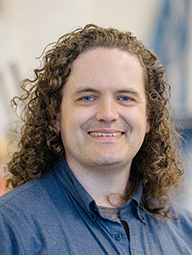
April 17, 2026
Meta-knowledge about observations in tractable robot planning under uncertainty
Dylan Shell is a computer scientist at Texas A&M University who works in the areas of robotics and AI. Broadly, his research aims to analyze and synthesize complex, intelligent behavior in systems that interact with the physical world. He has an interest in algorithmic and formal foundations of planning problems, and extremely simple (or minimal) robots. He has published papers on topics from multi-robot task allocation, biologically inspired multiple robot systems, estimation of group-level swarm properties, rigid-body simulation and contact models, and robotic theatre. His work has been funded by DARPA, DoD (ONR, ARL), NSF as well as Ford and 3M; he has been the recipient of teaching, service and reviewing, and research awards. Dylan serves as the President of the Robotics Science and Systems Foundation.
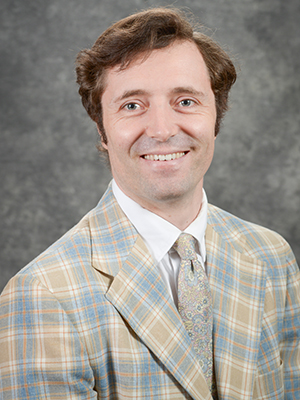
April 10, 2026
Challenges and Opportunities for Insect-Scale Autonomous Aerial Robots
Kevin Chen is an associate professor at the Department of Electrical Engineering and Computer Science, MIT, USA. He received his PhD in Engineering Sciences at Harvard University in 2017 and his bachelor’s degree in Applied and Engineering Physics from Cornell University in 2012. His research interests include high bandwidth soft actuators, microrobotics, and aerial robotics. He is a recipient of the Toshio Fukuda Young Professional Award, the Steven Vogel Young Investigator Award, the NSF CAREER Award, the Office of Naval Research Young Investigator Award, multiple best paper awards (TRO 21, RAL 20, IROS 15), and the Ruth and Joel Spira Teaching Excellence Award.
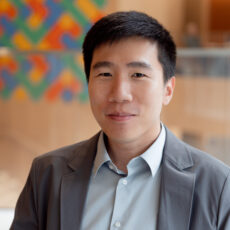
April 3, 2026
Don’t Relearn Physics: Learning Robot Motion with PDE Structure
Ahmed Qureshi is an Assistant Professor in the Department of Computer Science at Purdue University, where he directs the Cognitive Robot Autonomy and Learning (CoRAL) Lab. His research pursues a physics-first philosophy for robot motion learning: rather than relying on large expert demonstrations or trial-and-error interaction, his group develops methods that embed the governing laws of physics directly into learning algorithms. This approach has produced self-supervised methods that train in minutes, require no expert annotation, and plan in near real-time across high-dimensional, manipulation, and unknown environments. His broader research spans scalable motion planning, dexterous manipulation, active perception, and multi-agent task and motion planning. Dr. Qureshi’s work has been recognized with spotlight and best paper awards at top academic venues. He serves as an Associate Editor for IEEE Transactions on Robotics and IEEE Robotics and Automation Letters, and received the Outstanding Associate Editor Award from RA-L in 2024. He has served on the program committees of RSS, ICRA, IROS, and CoRL. He earned his B.S. in Electrical Engineering from NUST, M.S. from Osaka University, and Ph.D. in Intelligent Systems, Robotics, and Control from UC San Diego.
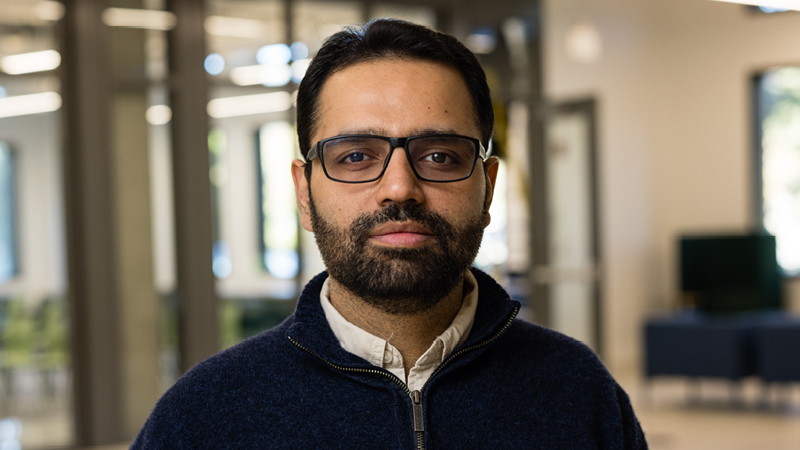
March 27, 2026
Building Generalizable Mobile Manipulation System
Saurabh Gupta is an Associate Professor in the ECE Department at UIUC. Before starting at UIUC in 2019, he received his Ph.D. from UC Berkeley in 2018 and spent the following year as a Research Scientist at Facebook AI Research in Pittsburgh. His research interests span computer vision, robotics, and machine learning, with a focus on building agents that can intelligently interact with the physical world around them.
March 13, 2026
Physics as the Backbone of Dexterity: Scalable Contact Simulation, Contact-Aware Control, and Physics-Grounded Learning
Wanxin Jin is an Assistant Professor in the School for Engineering of Matter, Transport and Energy at Arizona State University. His research lies at the intersection of robotics, control, and machine learning, with a focus on contact-rich dexterous manipulation, physics-grounded robot learning, and human-centered autonomy. Prior to joining ASU in 2023, he was a postdoctoral researcher at the GRASP Laboratory at the University of Pennsylvania. He received his Ph.D. in Aeronautics and Astronautics from Purdue University in 2021. His work has appeared in leading robotics and machine learning venues, including T-RO, IJRR, RSS, ICRA, ICML, and NeurIPS. He is an Associate Editor for IEEE Robotics and Automation Letters (RA-L)
March 6, 2026
Motion Imitation for Adaptive and Lifelike Control of Legged Robots
Dongho Kang is a Research Scientist at the Robotics and AI Institute (RAI). His research lies at the intersection of optimal control, reinforcement learning, and data-driven character animation. He received his Ph.D. in Computer Science (2025) and his M.S. in Mechanical Engineering (2019) from ETH Zurich. Previously, he obtained his B.S. from Seoul National University with a double major in Mechanical & Aerospace Engineering and Computer Science & Engineering (2016).
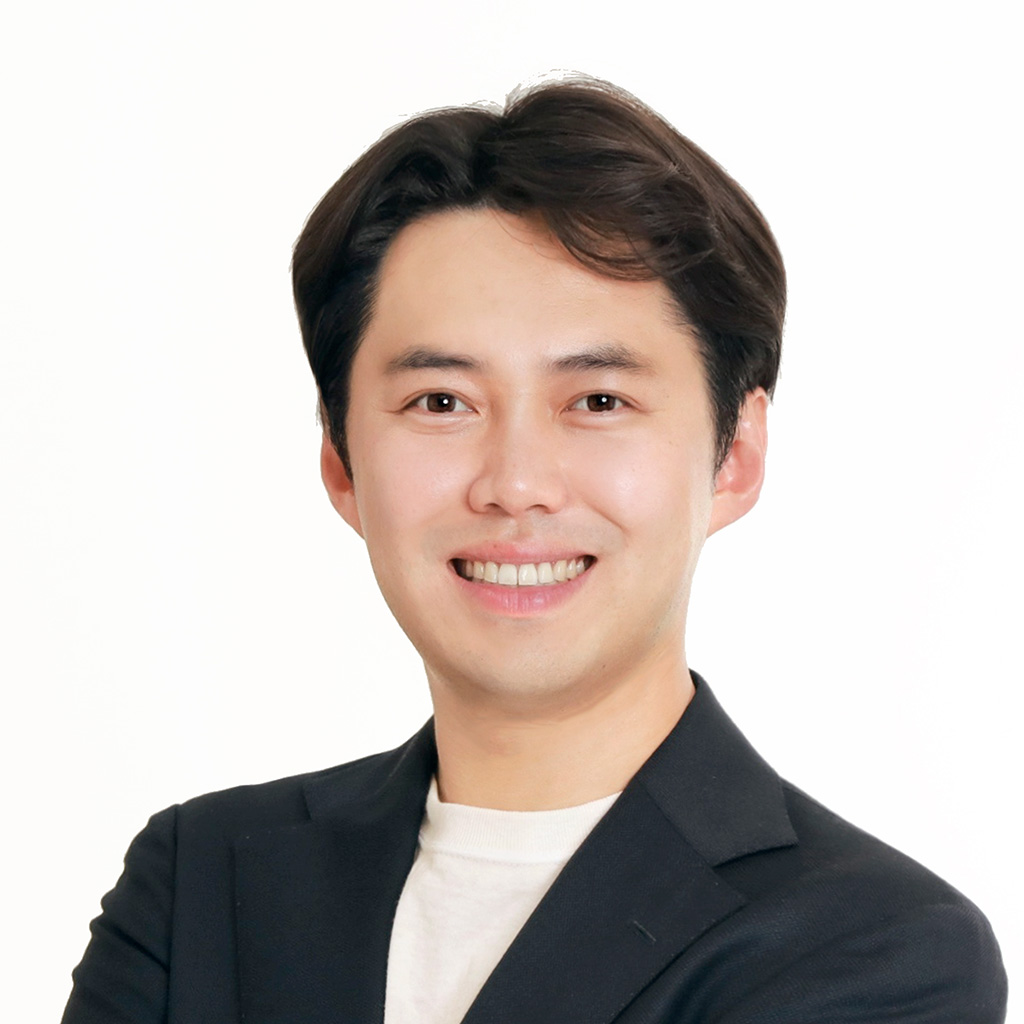
February 20, 2026
Learning and Planning with Relational Dynamics Models for Robot Manipulation
Tucker Hermans is an associate professor in the Kahlert School of Computing at the University of Utah, where he is a founding member of the University of Utah Robotics Center. He is also a senior research scientist at NVIDIA. Professor Hermans’ research focuses on autonomous planning, learning, and perception for robot manipulation. His wo which they have no previous knowledge or interaction. Previously, Professor Hermans was a postdoctoral researcher in the Intelligent Autonomous Systems lab at TU Darmstadt in Darmstadt, Germany working with Jan Peters on learning from tactile sensors for manipulation. He was at Georgia Tech from 2009 to 2014 in the School of Interactive Computing where he earned his Ph.D. in Robotics under the supervision of Aaron Bobick and Jim Rehg. He has an A.B. in Computer Science and German from Bowdoin College, as well as an M.Sc. in Computer Science from Georgia Tech.

February 13, 2026
Designing Living Machines from Dead Matter of Crustacean Exoskeleton
Dr. Sareum Kim is a Postdoctoral Researcher at the CREATE Lab at EPFL. She received her B.S. and M.S. degrees in Mechanical Engineering from Seoul National University and her Ph.D. in Mechanical Engineering from the University of California, Berkeley. Her research focuses on developing design methodologies for sustainable robotics by integrating life cycle thinking spanning material sourcing, fabrication, operation, and end of life strategy into robotic systems

February 6, 2026
Designing for Connection: Social-Physical Human–Robot Interaction and Emotionally Intelligent Technology
Dr. Alexis Block is an Assistant Professor in the Department of Electrical, Computer, and Systems Engineering at Case Western Reserve University, where she directs the SaPHaRI Lab (Social and Physical Human–Robot Interaction).
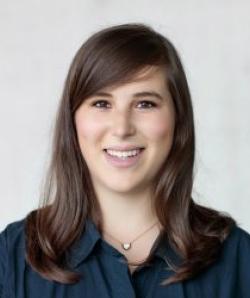
December 5, 2025
Unraveling Haptic Acuity in Human-Robot Partnerships
Janelle Clark is currently an assistant professor in the Mechanical Engineering Department at the University of Maryland, Baltimore County leading the Tactile and Robotic Assistance (TARA) Lab.
November 21, 2025
Interaction-Aware Planning and Decision Making
Dr. Tariq is a Senior Research Scientist in the Cooperative Intelligence - Mobility Research group at the Honda Research Institute, US.
November 14, 2025
Toward Advanced Autonomy in Complex Aquatic Environments
Dr. Wei Wang is an Assistant Professor in the Department of Mechanical Engineering at the University of Wisconsin–Madison.
NOVEMBER 7, 2025
Towards Open World Robot Safety
Andrea Bajcsy is an Assistant Professor in the Robotics Institute at Carnegie Mellon University where she leads the Interactive and Trustworthy Robotics Lab (Intent Lab).
See seminar information
OCTOBER 31, 2025
Illinois Student Talks:
Medical and Surgical Robotic Systems for Increased Access to Healthcare
Adaptive Stress Testing Black-Box LLM Planners
Alexander Smith is a sixth-year MD-PhD student at the Carle Illinois College of Medicine and the Siebel School for Computing and Data Science at the University of Illinois at Urbana-Champaign.
Neeloy Chakraborty is a fifth-year PhD candidate at the University of Illinois working in the Human-Centered Autonomy Lab.
See seminar information
OCTOBER 17, 2025
Toward Intelligent Manipulation: From Multimodal Sensing to Neural-Symbolic Control
Dr. Yu She is an assistant professor at Purdue University Edwardson School of Industrial Engineering.
OCTOBER 10, 2025
Surgineering Using Intelligent and Flexible Robotic Systems
Dr. Farshid Alambeigi is the Leland Barclay Fellowship in Engineering Associate Professor in the Walker Department of Mechanical Engineering at The University of Texas at Austin, where he has served since August 2025.
OCTOBER 3, 2025
Engineering Better Robot Learners: Exploration and Exploitation
Dinesh Jayaraman is an assistant professor at the University of Pennsylvania’s CIS department and GRASP lab.
SEPTEBER 26, 2025
Diversity in Motion Planning via Parallel Probabilistic Inference
Fabio Ramos is a Professor in robotics and machine learning at the School of Computer Science at the University of Sydney and a Principal Research Scientist at NVIDIA.
SEPTEBER 19, 2025
Digital Agriculture and the Journey Towards Autonomous Machines
Dr. John F. Reid is Executive Director of the Center for Digital Agriculture and Research Professor at the University of Illinois Urbana-Champaign, with joint appointments in the Siebel School of Computing & Data Science, the Department of Agricultural & Biological Engineering, and Electrical and Computer Engineering.